FAQs
Home > FAQs
M.RISE FAQs
Yes. M.RISE is a professional manufacturer specializing in CNC digital cutting and laser processing equipment, with machines exported to more than 70 countries worldwide. We focus on industrial-grade quality, long-term reliability, and global customer support.
You can evaluate our credibility through the following:
- Verified Company Registration – Legally registered manufacturing company with certified production facilities.
- International Certifications – CE, FDA, RoHS, and ISO9001 quality management certifications.
- Global Export Experience – Proven installations across Europe, North America, Asia, and other regions.
- Real Factory & Demonstrations – Customers are welcome to visit our factory or request live video demonstrations.
- Professional Contracts & Invoices – Standard international trade procedures with secure payment options.
- Official Business Communication – Corporate email, website, and documented technical support system.
- After-Sales Guarantee – 3-year warranty with lifetime technical support.
- Customer Feedback & Case Studies – Real application videos and success stories across industries.
Yes. Jinan M.RISE Machinery Equipment Co., Ltd. is the legal company entity behind both names. M.RISE is the company’s primary brand, while MRISECNC is a registered trademark in China and the official online brand identifier used for the website mrisecnc.com. Products, technical content and customer support presented under M.RISE or MRISECNC are provided by the same company.
Yes. M.RISE can provide the official EU Declaration of Conformity (DoC) for our CNC digital cutting machines upon request. The document is signed by the manufacturer and confirms that the equipment complies with applicable European safety and regulatory requirements.
Our machines are designed and manufactured in accordance with relevant EU directives and standards, including CE compliance requirements related to machinery safety, electrical systems, and electromagnetic compatibility. The Declaration of Conformity will typically include:
Manufacturer information and authorized signature
Machine model and serial identification
Applicable EU directives and harmonized standards
CE compliance confirmation
This documentation is commonly required for customs clearance, installation approval, and workplace safety compliance within European countries.
If you need the EU Declaration of Conformity for your project, our sales or technical team can provide it together with the machine documentation package after order confirmation.
Yes, our CNC Digital Knife Cutting Machines are designed for high-volume, continuous production. With advanced motorized systems and robust software, the machine ensures consistent performance across long production runs. Whether you’re cutting hundreds or thousands of pieces, the machine maintains high accuracy, ensuring that every cut meets the same standard. Additionally, our machines are equipped with automatic calibration systems to maintain precision over time.
Our CNC Digital Knife Cutting Machine is built with high-quality components and engineered for durability. With regular maintenance, the machine can last up to 10+ years. Key components, such as the cutting knife and motor, are designed for heavy-duty use and can be easily replaced when necessary. We provide comprehensive training on maintenance and offer an extensive warranty to ensure your machine operates smoothly for years to come.
Our machine excels in cutting complex multi-layered materials, including fabrics, composites, and foam. The oscillating knife technology provides a clean, precise cut through multiple layers without the risk of material shifting or damaging underlying layers. The blade pressure and speed are customized to suit the thickness and type of material, ensuring a perfect cut every time, even for delicate and complex compositions.
Yes, our CNC Digital Knife Cutting Machine is designed for seamless integration with existing production lines and software systems. It supports standard file formats (e.g., DXF, SVG) and can easily connect with ERP or MES systems to streamline your workflow. We also offer API integrations to ensure smooth communication between your production software and the cutting machine, minimizing downtime and improving efficiency.
Our CNC Digital Knife Cutting Machine comes with an intuitive, user-friendly software suite compatible with popular design programs like AutoCAD, Adobe Illustrator, and CorelDRAW. We offer lifetime software updates to ensure compatibility with the latest technologies and improved features. Our dedicated technical support team is available to assist with any software-related questions or troubleshooting.
We provide comprehensive international customer support. Our support team is available 24/7 through email, phone, and live chat for quick responses.
We offer remote diagnostics and can guide you through troubleshooting steps to resolve any issues. In case of more complex problems, our technicians can arrange onsite visits to ensure minimal disruption to your operations.
We also provide extensive user manuals and video tutorials to help you get the most out of the machine.
We offer a standard 1-2 year warranty on all parts and labor, with an optional extended warranty available. Spare parts are stocked in regional warehouses to ensure quick delivery, minimizing downtime in case of repairs. We also provide service contracts that include regular maintenance, software updates, and priority support for faster resolution of any technical issues.
This is the frequency of light the laser cutter uses to cut materials, so it is very ineffective at cutting polycarbonate. Polycarbonate is a poor choice for laser cutting. ABS Emits cyanide gas and tends to melt ABS does not cut well in a laser cutter.
Fiber Laser Vs CO2 Laser:
Material Type: Fiber lasers excel at cutting metals like stainless steel and aluminum, whereas CO2 lasers are better for non-metallic materials such as wood and acrylic.
Cutting Speed: Fiber lasers offer faster cutting speeds, especially for thin materials, making them more efficient for high-volume production.
At the heart of this innovation is the fibre laser, a device that generates a high-intensity laser beam through an optical fibre doped with rare-earth elements.
This technology has revolutionized how materials are cut, engraved, and processed across various sectors.
Normally, 3000W fiber laser cutting machine the maximum thickness of carbon steel is 20mm;
The maximum thickness of stainless steel is 10mm;
The maximum thickness of aluminum plate is 8mm;
The maximum thickness of copper plate is 8mm.
Choosing the Right Cutting Machine:
When trying to decide what power laser to buy, ask for time studies on your typical parts. You can then compare the capacity and the time to manufacture to decide on speed versus machine cost.
If you will never cut anything thicker than ½” or ¾” then you can use a laser with less power.
CAM Software
This type of software converts CAD designs into machine-readable code, often in the form of G-code, that the laser cutter can execute. CAM software typically includes features for toolpath generation, nesting, and simulation. Examples of CAM software include Fusion 360, Mastercam, and VCarve Pro.
During the fiber laser cutting process, an assist gas blows through a nozzle on the laser cutting head. How much gas is needed can vary, but it’s generally a small amount.
OPERATING COST
Operating costs vary, but according to available industry data, the average cost to run a 6kW CO2 laser cutter is about $12.73 per hour. Compare that to a 6kW fiber laser system, which has an average per-hour cost of $4.24, and you’ll see why the latter may be more worth it for some facilities.
A fiber laser has a lifespan of 50k to 100k hours of usage. After that, the laser source degrades and draws less power from the socket.
The lasers that can effectively cut stainless steel are fiber and CO2 lasers.
Fiber lasers can produce much narrower beams — typically half the diameter of the cutter ‘dot’ of a CO2 laser. This results in about quadruple the effective power for the same laser output energy.
1kW: Up to 6mm carbon steel, 3mm stainless, 1.5mm aluminum.
1.5kW: Up to 9mm carbon steel, 4.5mm stainless, 2.25mm aluminum.
2kW: Up to 12mm carbon steel, 6mm stainless, 3mm aluminum
Fiber laser cutters, renowned for their precision and speed, typically have a lifespan of approximately 100,000 hours. This longevity can vary based on factors such as maintenance practices, operational conditions, and the quality of components.
Below, we explain what these specifications are, why they matter, and how they influence a fiber laser system’s performance.
Laser Power. …
Marking Area. …
Marking Speed. …
Marking Precision. …
Software Connectivity and Integration. …
Maintenance Requirements and Manufacturer Support. …
Upfront Cost.
CO2 vs. Fiber Laser – Which One Should You Buy? |
If you’re looking to mark metal, what you need to buy is a fiber laser. If you’re looking to mark organic materials like textiles, wood, or cardboard, a CO2 laser is the best choice.
If your application is laser cutting of metals, you’ll most likely need a high-power CW (continuous wave) fiber laser.
A laser cutter focuses a high energy laser beam onto a material or substrate resulting in a high quality and accurate cut. Laser cutters pose potential hazards from exposure to the laser light, high temperatures that could result in a fire, and toxic air contaminants that may be inhaled.
You can absolutely make money with a laser cutting business. In fact, any laser cutting machine owner who is not making money with their laser machine is probably not trying to. The advantage of the laser engraver cutter is that it can turn low-cost items into valuable products quickly, accurately, and easily.
Lasers can cut a wide range of materials, including metals (like stainless steel, aluminum, and copper), plastics, wood, acrylic, leather, fabric, foam, and more.
The suitability of a material for laser cutting depends on its composition, thickness, and the type of laser being used.
Never direct the beam toward other people. Operate lasers only in the area designed for their use and make sure that the beam is terminated at the end of its use path. Never allow a laser beam to escape its designated area of use. Position the laser so that the beam is well above or below eye level.
They are just called laser cutters or laser engravers based on what their main use is. If the laser is largely used for cutting, it is usually referred to as a laser cutter. If engraving is the main application, it is called a laser engraver.
A laser engraving machine is a piece of equipment that performs laser engraving, which is the process of engraving designs, letters or numbers on materials using a laser beam.
These engraving machines use automation to achieve precise cuts and engravings on various materials, including metal, wood, glass and plastic.
Yes and no. If you’re expecting to master it in a day, you’ll probably be frustrated. But if you enjoy learning and are willing to be patient with yourself, it’s an incredibly rewarding skill to pick up.
Laser cutting accuracy depends on several factors, including the type of laser, the power of the laser, and the material being cut. Cutting tolerances are typically within ±0.005 inches, ensuring high precision in manufacturing applications.
Fiber laser beams
Fiber laser beams offer a metal friendly wavelength that metal absorbs more efficiently. The smaller spot size and excellent beam profile make it ideal for cutting most any metals.
1.0-inch-thick
Another application for high-power lasers is the cutting of carbon steel. A 4,000-watt laser can process up to 1.0-inch-thick carbon steel, and a 6,000-watt laser can process 1-5/8-inch-thick carbon steel.
Mild steel
Mild steel is a great choice for laser cutting projects. It’s a versatile material that can be used in construction, manufacturing and transportation. In the automotive industry, mild steel is used to make parts like axles and frames
The precision of the laser beam allows for sharp corners and fine details that might be challenging to achieve with other methods. In some cases, particularly with thicker materials or certain alloys, you might notice a slight taper on the cut edge.
Laser Machines Warranty for 3 years of whole machine
Laser source, Air compressor, Stabilizer warranty for 2 years;
If any parts are damaged during the warranty period, we will repair or replace them with new ones free of charge.
These devices are compact, portable, and generally less expensive than their larger, more industrial counterparts.
Prices can range from $2,500 to $8,000 for basic models suitable for amateur use, to around $21,000 to $25,000 for manufacturer-grade systems.
A handheld laser welding machine can weld a material up to 6mm of single side weld, and up to 12mm with double side weld.
Traditional argon arc welding can weld up to 4mm thick material
The machine has undergone strict OQC and debugging before shipment.
And we already gained CE, FDA, ISO certificates, ect. So that we can export to any countries and areas in the world.
Absolutely. Laser welders are highly regarded for their ability to deliver precise, clean, and efficient welding results.
The laser’s ability to deeply penetrate into materials results in purer, stronger welds than traditional welding techniques
Auxiliary cutting of metal materials.
Laser welder can cut galvanized sheets, carbon steel, aluminum sheets and stainless steel materials with a thickness of 2 mm.
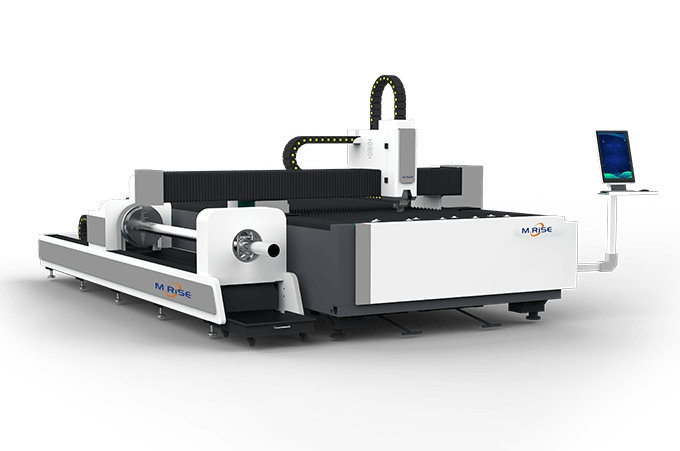
The price of a CNC tube and profile laser cutting machine depends on several key factors — including laser power, cutting diameter, feeding system, and automation level.
For example:
A standard 300 mm, 12-meter tube cutting machine with a 3 kW–4 kW fiber laser typically ranges from USD 65,000 to USD 85,000.
Higher-power models (6 kW–12 kW) with automatic loading/unloading systems may cost USD 160,000–260,000+.
The maximum cutting thickness of different materials with a 1000W fiber laser cutting machine is as follows:
The maximum thickness of carbon steel is 10 mm;
The maximum thickness of stainless steel is 5 mm;
The maximum thickness of aluminum is 3 mm;
The maximum thickness of copper is 3 mm.
M.RISE provides multilingual instruction manuals to support customers worldwide. Our CNC digital cutting machines are available with documentation in the following languages:
- English
- German
- Spanish
- Portuguese
- French
- Arabic
The documentation package typically includes installation guides, operation instructions, safety procedures, maintenance manuals, and troubleshooting information to ensure smooth machine operation and operator safety.
We understand that clear technical documentation in the local language is essential for efficient production and fast training. Additional language support may also be available upon request depending on the project requirements.
In addition to manuals, M.RISE offers remote technical guidance, training videos, and online support to help customers start production quickly and confidently.
Our CNC Digital Knife Cutting Machine offers high precision with a cutting accuracy of up to 0.1mm, ensuring intricate details and fine cuts, similar to laser cutting machines. Unlike lasers, our system does not produce heat-affected zones, making it ideal for sensitive materials like textiles, leather, and foam. In comparison to traditional blade cutting, the CNC digital knife provides smoother, more consistent cuts, reducing material waste and the need for rework.
M.RISE CNC Oscillating Knife Cutting Machines are built with carefully selected industrial components to ensure reliable performance, safety, and long-term operation.
Depending on the machine configuration, M.RISE systems can include:
Schneider Electric electrical protection components for stable and safe power management
AIRTAC pneumatic components for reliable air control and actuator performance
Industrial servo motors and drives for precise motion control
Precision linear guide systems and rack-and-pinion transmission for stable machine movement
Professional CNC control systems for accurate cutting operations
The selection of industrial-grade components helps improve machine stability, reduce unexpected downtime, and maintain consistent cutting performance during continuous production.
The reliability of a CNC Oscillating Knife Cutting Machine depends on more than cutting speed and blade technology.
A complete CNC cutting system includes multiple critical subsystems:
Mechanical structure
Motion control system
Electrical protection system
Pneumatic system
Cutting tool system
CNC control software
Each component affects the overall machine performance.
For example:
High-quality electrical components help improve operational safety and system stability.
Reliable pneumatic components ensure consistent tool movement and machine functions.
Precision transmission components help maintain cutting accuracy during long-term operation.
For industrial customers, choosing a CNC cutting machine with reliable internal components can reduce maintenance requirements and improve production efficiency.
Before purchasing a CNC Oscillating Knife Cutting Machine, customers should evaluate more than the machine price.
Important factors include:
Machine structure and rigidity
Cutting accuracy and repeatability
Quality of electrical and mechanical components
Available cutting tools and material compatibility
Technical support and after-sales service
Manufacturer experience and production capability
A reliable CNC cutting machine supplier should provide transparent information about machine design, components, applications, and technical support.
Industrial CNC cutting machines are designed for long-term production environments.
Using low-quality components may reduce initial costs, but it can increase risks related to machine downtime, maintenance, and production stability.
M.RISE focuses on balancing cost efficiency with reliable engineering by selecting proven industrial components and designing machines for practical manufacturing applications.
Our goal is to provide dependable CNC cutting solutions for global manufacturers.
M.RISE improves CNC cutting machine reliability through a combination of engineering design, component selection, manufacturing processes, and quality control.
Important factors include:
- Precision-machined mechanical structures
- Industrial-grade electrical and pneumatic components
- Stable servo motion systems
- Strong welded machine frame
- Factory testing before delivery
By focusing on both machine structure and component quality, M.RISE provides reliable CNC oscillating knife cutting solutions for global manufacturers.
M.RISE CNC Oscillating Knife Cutting Machines support multiple cutting tools for different material requirements.
Available tools include:
- Oscillating knife for foam, rubber, EVA, gasket, and flexible materials
- Creasing wheel for packaging materials
- Bevel cutting knife for angled cutting applications
- Other customized tools according to customer requirements
The multi-tool system allows manufacturers to process different materials with one CNC digital cutting platform.
The performance of a CNC oscillating knife cutting machine depends on more than the cutting blade itself.
Motion components, electrical systems, pneumatic components, and machine structure all affect cutting accuracy, stability, and service life.
For industrial applications, high-quality components help ensure:
- More stable cutting movement
- Higher repeatability
- Reduced machine downtime
- Consistent cutting quality
- Reliable long-term operation
M.RISE combines precision mechanical design with reliable industrial components to provide CNC digital cutting solutions for foam, rubber, EVA, gasket, textile, packaging, and composite materials.
M.RISE CNC Oscillating Knife Cutting Machines are built with selected industrial components to improve motion stability, cutting accuracy, and long-term reliability.
Key components include:
- Taiwan CSK linear guide rails for smooth and stable movement
- Taiwan JT rack system for accurate transmission
- Japanese Panasonic servo motors for precise motion control
- Zhuolan gearbox for stable mechanical performance
- Schneider Electric components for electrical protection
- AIRTAC pneumatic components for reliable pneumatic operation
In addition to component selection, M.RISE focuses on overall machine engineering, including a welded machine bed, precision-milled crossbeam, multi-tool cutting head, and optimized vacuum holding system.
M.RISE pairs factory-direct R&D engineers with our dedicated regional engineering team based in Serbia. Located at the crossroads of Central and Southeast Europe, our Serbian field engineers provide same-time-zone technical communication, hands-on machine installation, operator training, and on-site troubleshooting across the DACH region, Poland, Italy, and broader European manufacturing hubs. This dual-tier structure ensures European plants receive manufacturer-level engineering expertise without cross-continental communication delays.
Traditional distributors operate as commercial intermediaries—taking purchase orders and marking up spare parts. M.RISE’s European technical presence operates as an accountable engineering bridge. Our team:
- Conducts pre-sale material cut evaluations and CAD-to-toolpath optimization.
- Ensures full compliance with European machine safety directives (CE standard integration and light-curtain safeguarding).
- Maintains a localized inventory of critical wear parts (blades, milling bits, felt underlays, and pneumatic modules) for rapid overland dispatch.
- Provides continuous shop-floor workflow optimization directly alongside your operators.
Precision is built into the mechanical chassis long before software compensation is applied. Unlike budget builders who use top-down leveling screws that penetrate and clog the vacuum grid, M.RISE utilizes a labor-intensive Under-Bed Leveling protocol. Technicians adjust the aluminum vacuum deck exclusively from underneath the elevated frame, leaving 100% of the micro-perforated vacuum suction ports open. Every bed is dynamically verified using gantry-mounted dial test indicators sweeping the table to eliminate wave deflections that could cause blade drag or uneven cut depths.
Yes. We specialize in cold mechanical shearing without thermal distortion:
- Solid Silicone Rubber (up to 20mm+): Using high-torque carbide routing and specialized top masking to eliminate tool chatter, friction melt, and silica ash.
- Closed-Cell EVA / EPE Foam: Equipped with multi-angle beveling units and high-frequency oscillating knives (POT) to cut complex multi-depth stepped cavities and 45° folding joints in a single setup without layered adhesives.
We operate under a strict engineering principle: Brochure claims mean nothing.
Every elastomeric compound and composite behaves differently under vacuum pressure and blade stroke frequencies. We invite European manufacturers to send raw material samples and .dxf drawings to our testing center. Our engineers will perform a Free Live Validation Cut, provide an uncut 4K video documenting feed rates and cycle times, and return the finished parts to your facility for physical CMM/caliper inspection.


GET A QUOTE
Talk to Expert and Get Tailored Cutting Solution Free
Whether you’re exploring options or ready for a quote, our team is ready to support you with honest answers and fast service.Tell us what you need—just one minute to get started.