Industry Application
Home > Metal Processing Industry Application
Metal Processing Industry Application
Metal Processing Industry Application
The metalworking industry requires the use of a variety of machinery and equipment to perform different types of processing and manufacturing work. The following are some common machines and equipment in the metal processing industry:
Press Breaks – Metal Plate Bending machine (folding bed): used to bend metal sheets into the required shape.
Metal Pipe bending machine: It is a piece of equipment used to bend metal pipes.
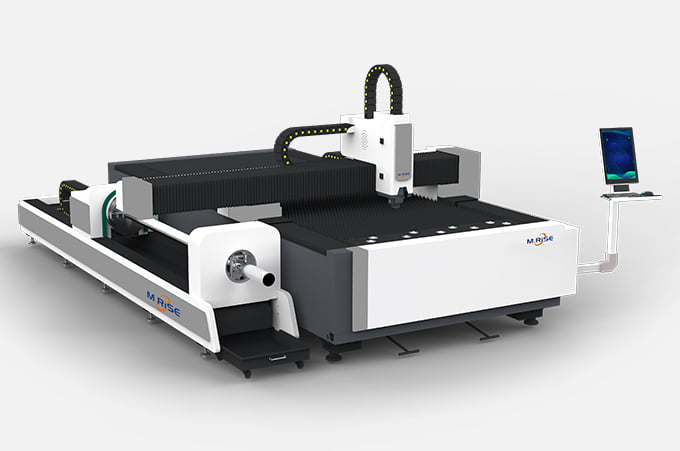
Laser cutting machine: Common fiber laser cutting machines and CO2 laser cutting machines. It is mainly used to cut flat workpieces by moving the laser cutting head or workbench on the plane. It is mainly used for flat or thin plate-shaped workpieces and can perform two-dimensional plane cutting.
Fiber laser cutting machines are suitable for cutting metal materials, such as stainless steel, carbon steel, aluminum alloy, nickel alloy, titanium alloy, etc.
CO2 laser cutting machine is suitable for cutting non-metallic materials, such as acrylic, plastic, wood, medium density fiberboard, plywood, solid wood, etc.
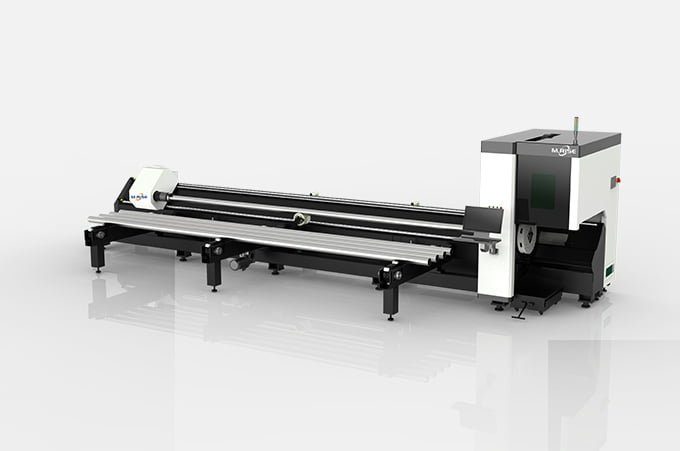
Laser pipe cutting machine: specially designed for cutting pipes or tubular workpieces, with special cutting functions for tubular workpieces. The laser pipe cutting machine can process pipes of different shapes such as round pipes, square pipes, oval pipes, special-shaped pipes, multi-channel pipes, etc. The cutting materials include stainless steel, carbon steel, alloy steel, aluminum alloy pipes, etc.
Welding machines: including arc welding machines, laser welding machines, etc., used for connecting metal parts.
Robots and Automation Systems: Used to perform repetitive and precise tasks on production lines, improving production efficiency.
Below is a brief introduction to various machines:
- Fiber laser cutting machine: Fiber laser cutting machine is a high-precision CNC cutting equipment that uses fiber laser as the cutting light source. It uses a laser beam to irradiate the workpiece with a high energy density focus, thereby instantly evaporating or melting the surface material of the workpiece to achieve precise cutting. Fiber laser cutting machine power includes 1000 watts, 3000 watts, 6000 watts, 10,000 watts, and 20,000 watts fiber laser cutting machines.
Some main features of fiber laser cutting machines: Flexibility, fiber laser cutting machines can be precisely controlled by a CNC system to achieve cutting of complex graphics, and are suitable for workpieces of various shapes and sizes. High-precision, fiber laser cutting machine has high-precision cutting capabilities, can achieve fine cutting, and is suitable for applications that require high cutting accuracy. High-speed cutting, fiber laser cutting machine has fast cutting speed, which improves production efficiency and is especially suitable for mass production. Non-contact cutting, laser cutting is a non-contact cutting method, which avoids physical contact with the workpiece surface, reducing cutting loss and tool wear. Low maintenance costs: Fiber lasers have long life and stability, and compared to other laser sources, maintenance costs are relatively low.
It replaces traditional cutting equipment such as plasma cutting machines, oxygen cutting equipment, and mechanical cutting equipment in production.
Main applications of fiber laser cutting machines:
Metal processing: Used for cutting metal materials, including stainless steel, aluminum, copper, steel, etc.
Automobile manufacturing: Suitable for cutting auto parts, such as body panels, chassis components, etc.
Electronics industry: Used for cutting electronic components, such as circuit boards, metal casings, etc.
Aerospace: Used for cutting metal parts in the aerospace field, such as aircraft parts, missile casings, etc.
Metallurgical industry: Suitable for cutting steel and other metal materials for metallurgical production.
Equipment manufacturing: Used to manufacture parts of mechanical equipment, such as gears, bearings, etc.
- Laser pipe cutting machine, a laser cutting equipment specially used for cutting pipes. It has a special design that allows precise laser cutting on the pipe surface to meet the needs of pipe processing and manufacturing.
Machine features: Pipe applicability. The laser pipe cutting machine is mainly used for cutting metal pipes, such as stainless steel, carbon steel, aluminum alloy, etc. Suitable for pipes of various shapes and diameters.
High-precision cutting, the laser pipe cutting machine can achieve high-precision cutting of pipes, with smooth cutting edges and excellent cut quality.
Versatility, in addition to cutting, the laser pipe cutting machine can also perform lettering, engraving and drilling of various shapes, providing more processing options.
Automated operation, equipped with advanced CNC system, can realize automatic pipe positioning, clamping and cutting, improving production efficiency.
Fast cutting speed, laser pipe cutting machines usually have fast cutting speed and are suitable for the production of large quantities of pipes.
Save material, due to the non-contact nature of laser cutting, material waste during the cutting process can be minimized.
Application areas:
Pipe manufacturing, used for cutting various pipes, including round, square, rectangular and other special-shaped pipes, commonly used in pipe manufacturing industry.
Metal structure manufacturing, suitable for cutting pipe components in metal structures, such as steel structures, bridges, building supports, etc.
Automotive industry, used for cutting automobile exhaust pipes, pipe parts in body structures, etc.
Aerospace, in the aerospace field, laser pipe cutting machines can be used to cut various pipes in aircraft structures.
Oil and Gas, used for cutting pipes and fittings in the oil and gas industry.
Assembly line production, the laser pipe cutting machine can be integrated into the assembly line to achieve an efficient production process.
Furniture manufacturing, used for cutting pipes in furniture, such as tables, chairs, cabinets, etc.
- Bending machine applies bending force to the metal plate to cause bending deformation along a specific axis. The main function of the bending machine is to bend flat materials into required shapes for making various metal components and parts.
main feature:
Bending accuracy, the bending machine can achieve high-precision bending and ensure the accuracy of the bending angle and shape of the metal plate.
Multi-axis control: Advanced bending machines are usually equipped with CNC systems that can achieve multi-axis control, allowing them to achieve more complex bending in three-dimensional space.
Wide applicability, the bending machine is suitable for metal plates of different thicknesses and hardness, including steel plates, stainless steel plates, aluminum plates, etc.
With high production efficiency, the bending machine can complete bending tasks quickly and efficiently in production, and is suitable for mass production.
Automated operation, some modern bending machines have automation functions, which can realize automatic loading, bending and unloading, reducing manual intervention.
Bending tool replacement, the press brake can be equipped with different types of bending tools, making it suitable for bending tasks of many shapes and sizes.
Application areas:
Metal processing and manufacturing, bending machines are widely used in metal structure manufacturing, sheet metal processing, mechanical equipment manufacturing and other fields.
Automobile manufacturing. In automobile manufacturing, bending machines are used to make automobile body components, chassis parts, etc.
Aerospace, used to manufacture metal components for aircraft and spacecraft, such as fuselage shells, wings, etc.
Construction engineering, used to make metal components in building structures, such as roofs, wall panels, etc.
Electrical equipment manufacturing, used to make electrical boxes, cable trays and other metal electrical equipment parts.
In the electronics industry, in the manufacturing of electronic products, bending machines are used to make parts such as casings and chassis.
Agricultural machinery is used to make metal parts for agricultural machinery and equipment, such as tractor frames, farm implement parts, etc.
- Pipe bending machine mainly applies force or uses a hydraulic system to bend metal pipes along a specific axis or curve. This type of machine plays an important role in the field of pipe processing and manufacturing and is widely used to make various pipe parts and structures.
main feature:
Bending accuracy, the pipe bending machine can achieve high-precision bending and ensure the accuracy of the bending angle and shape of the pipe.
Wide applicability, the pipe bending machine is suitable for metal pipes of different diameters and wall thicknesses, including steel pipes, stainless steel pipes, copper pipes, etc.
Multi-axis control: Advanced pipe bending machines are usually equipped with CNC systems that can achieve multi-axis control, allowing them to achieve more complex bending in three-dimensional space.
Automated operation, some pipe bending machines have automated functions, which can realize automatic feeding, bending and discharging, improving production efficiency.
Bending tool replacement, the pipe bending machine can be equipped with bending tools of different shapes and sizes, making it suitable for a variety of bending radii and bending shape needs.
Versatility, the pipe bending machine can not only perform single plane bending, but also achieve complex three-dimensional bending, suitable for various design requirements.
Application areas:
Pipe manufacturing, used to make various pipelines, including transportation pipelines, oil and gas pipelines, HVAC pipelines, etc.
Automobile manufacturing. In automobile manufacturing, pipe bending machines are used to make pipe parts such as exhaust pipes and chassis structures of automobiles.
Aerospace, used to manufacture pipeline structures for aircraft and spacecraft, such as oil pipeline systems, air source systems, etc.
Construction engineering, used to make pipes in buildings, such as stair handrails, railings, etc.
Electrical equipment manufacturing, used to make pipelines in electric power projects, such as cable trays, cable protection tubes, etc.
Food and beverage industry, used to make pipes in food processing equipment, such as conveying pipes, cooling pipes, etc.
Medical equipment. In the medical field, pipe bending machines can be used to make medical oxygen pipes, infusion stents, etc.
Petrochemical industry, used to make pipelines in petrochemical equipment, such as reactors, heat exchangers, etc.
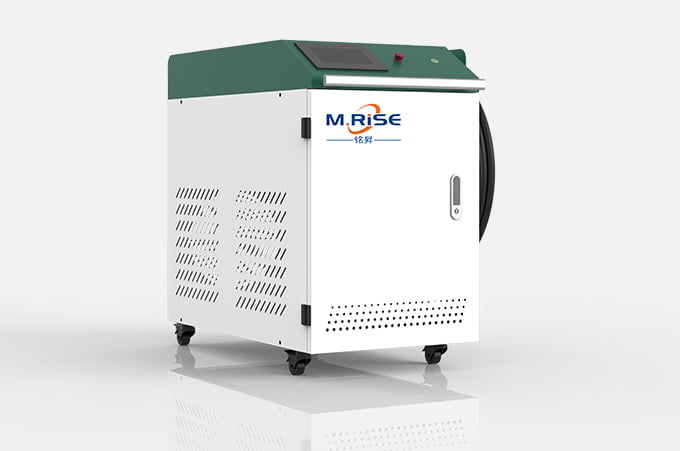
- Laser welding machine, which uses a laser beam to locally heat the welding material to the melting point, causing it to melt and form a weld after solidification. Laser welding has the characteristics of high energy density, precise focus, and high-speed welding, and is suitable for welding a variety of materials.
main feature:
High energy density, laser welding machine can provide very high energy density, making the welding process more precise and faster.
Precise focusing, the laser beam is focused through the lens system. The focus is small and concentrated, which is conducive to high-precision welding.
Non-contact welding, laser welding is a non-contact welding method that does not require actual contact with the welded parts, reducing material contamination and damage.
No pollution, no need to add additional flux or filler materials during light welding, reducing environmental pollution.
Small heat affected zone, because the welding process is very fast and the heat input is less, laser welding usually has a small heat affected zone, reducing thermal deformation.
With a high degree of automation, laser welding machines can be integrated into automated production lines to achieve large-scale and high-efficiency production.
It has strong controllability. By controlling parameters such as laser power and focal length, precise control of the welding process can be achieved.
Application areas:
Automobile manufacturing, used for welding of auto parts, such as body, chassis, etc.
Electronic industry, suitable for micro-welding of electronic components, such as chip connection.
Medical equipment, used for welding fine parts in medical equipment, such as laser blades, etc.
Aerospace, suitable for welding of aircraft, rockets and other aviation components.
Electrical equipment, used for welding cables, wires and other electrical equipment.
Metal processing, suitable for high-precision welding of metal structures, pipes, etc.
- The robot welding machine is an automated welding system that uses robots to perform welding tasks. Such systems usually include components such as robots, welding equipment, control systems, and sensors to achieve efficient, precise, and repeatable welding work.
main feature:
With a high degree of automation, robot welding machines can realize automated welding processes, reduce manual intervention, and improve production efficiency.
High-precision welding. Due to the precision motion control of the robot, the robot welding machine can achieve high-precision welding and ensure the quality of the weld.
Highly flexible, the robotic welding system can adapt to workpieces of different shapes and sizes, handling diverse welding tasks through flexible programming and adaptability.
Multi-axis motion control, advanced robotic welding systems usually have multi-axis motion control, which can achieve complex motion trajectories in three-dimensional space.
With high production efficiency, the robotic welding system can weld continuously and stably, achieve large-scale production, and continue to work without the need for rest.
Programmability: Operators can program the robot to set tasks to adapt to different welding requirements.
For quality control, the robotic welding system can monitor the welding process in real time through sensors to achieve quality control and defect detection of welds.
Human-machine collaboration, some advanced robotic welding systems support collaboration with human operators and can complete welding tasks together to a certain extent.